This page draws primarily on materials from the United States Conference of Catholic Bishops (USCCB)
The Four Periods of OCIA
The OCIA journey is divided into four distinct periods, each marking a new step in spiritual and catechetical formation. These periods are not rigid timelines, but milestones of conversion, preparation, and grace. Each period has its own characteristics and there are rites associated with each period.
Period One: Inquiry (Pre-Catechumenate)
This first period is a time of evangelization and initial conversion. It is intended for those who are inquiring about the Catholic faith, and who may not yet be ready to commit, but are drawn to learn more.
During this stage, individuals hear the Gospel proclaimed and are introduced to the core teachings and practices of the Catholic Church, including the Tradition handed down through apostolic succession. It is a time for asking questions, building trust, and seeking God’s guidance.
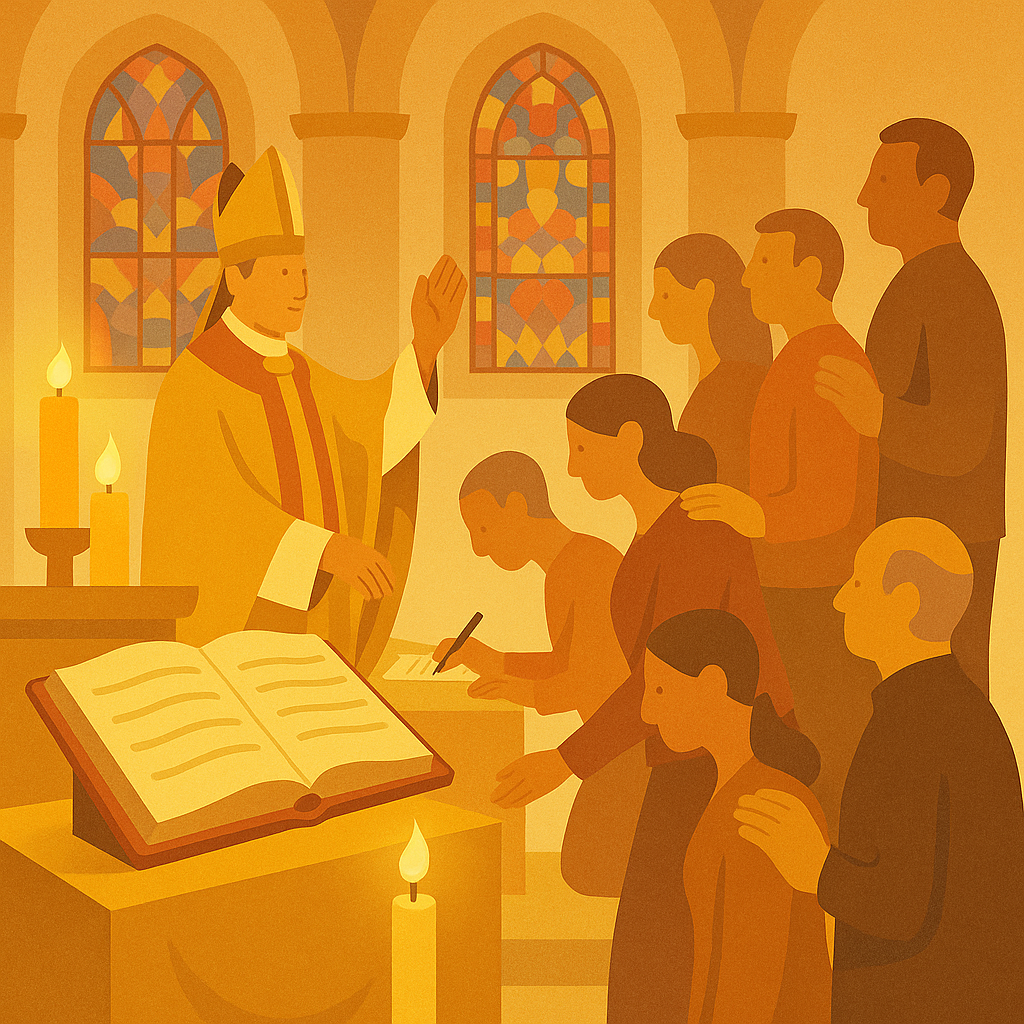
If, after this period of inquiry, a person freely expresses the desire to continue, they may take part in the Rite of Acceptance into the Order of Catechumens. This liturgical rite—usually celebrated once or twice a year—marks the official beginning of the next stage, as the Church publicly affirms the inquirer’s intention to follow Christ more fully and offers its prayerful support.
Period Two: The Catechumenate
This period is a time of deepening faith and formation, in which those who have entered the Order of Catechumens begin to grow in their relationship with Christ and His Church.
During this stage, catechumens reflect more deeply on Sacred Scripture, receive consistent instruction through catechesis (the systematic explanation of Catholic beliefs and traditions), and participate in the liturgical rites that accompany their journey.
It is a period marked by the nurturing of faith, the growth of personal conversion, and a greater connection to the Christian community through prayer, worship, and fellowship.
This stage concludes with the Rite of Election, a significant liturgical moment typically celebrated on the First Sunday of Lent. In this rite, the Church formally acknowledges the readiness of the catechumens to receive the Sacraments of Initiation. From this point forward, they are called the Elect, having expressed their firm intention to enter fully into the life of Christ and His Church.
Period Three: Purification and Enlightenment
This period is a time of intense spiritual preparation that leads the Elect closer to receiving the Sacraments of Initiation. It is marked by deeper interior reflection, examination of conscience, and a more focused turning toward God.
Celebrated during the season of Lent, this period includes the Scrutinies, which take place on the third, fourth, and fifth Sundays. These liturgical rites are meant to uncover and heal what is weak, and to strengthen what is upright in the hearts of the Elect.
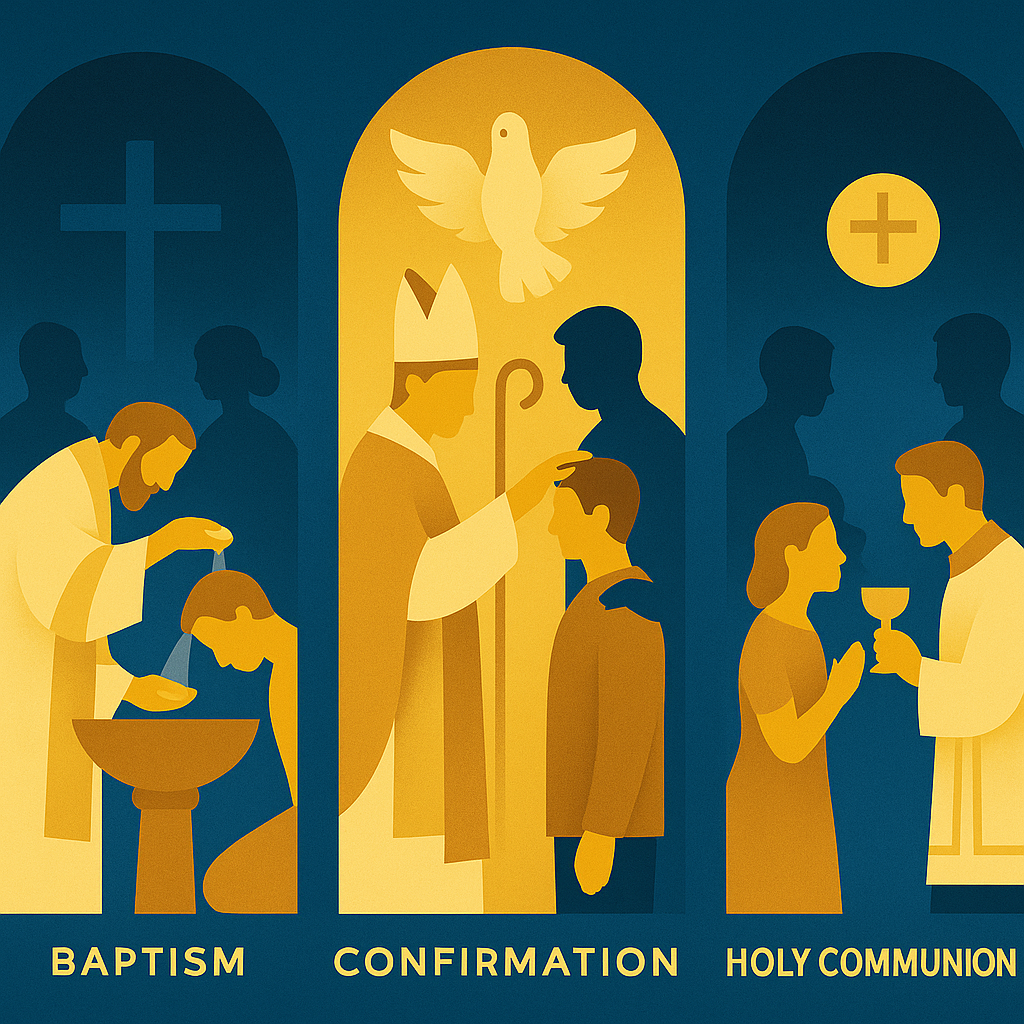
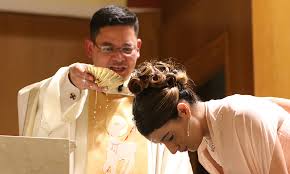
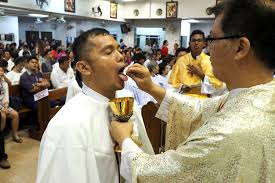
During this time, the Elect are also presented with the Nicene Creed and the Lord’s Prayer, two pillars of the Church’s faith and prayer life. The period of Purification and Enlightenment culminates with the celebration of the Sacraments of Initiation—Baptism, Confirmation, and the Holy Eucharist—at the Easter Vigil, the most solemn and joyful liturgy of the year.
Period Four: Mystagogy
This final period of the OCIA journey begins after the celebration of the Sacraments of Initiation and is marked by a new experience of the sacramental life and a deeper entry into the unity and worship of the Church.
Those who have just been initiated—now called Neophytes—are encouraged to take part in the life of the parish, not only by participating in the Eucharist, but by becoming involved in the Church’s ministries and mission.
Mystagogy extends throughout the Easter Season, concluding liturgically with Pentecost, but the work of mystagogy—reflecting on the mysteries received and living out one’s new identity in Christ—continues far beyond. Pentecost never ends. This is a period of ongoing formation, where the newly initiated begin to take their place in the Church not as seekers, but as full members, called to holiness, service, and witness.
GODPARENTS & SPONSORS
Sponsors and Godparents play a vital role in the OCIA journey. They are not merely ceremonial witnesses, but spiritual companions and mentors, chosen to support the Catechumens and Candidates as they draw closer to full initiation into the Catholic Church.
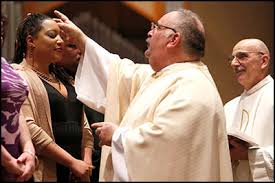
A Sponsor is assigned to Candidates (already baptized Christians) and a Godparent to Catechumens (unbaptized persons). These individuals should be chosen based on spiritual example, personal friendship, and a demonstrated life of faith. They are present at key moments of the OCIA process, especially the Rite of Acceptance, the Rite of Election, and the Sacraments of Initiation at the Easter Vigil.
Sponsors and Godparents should:
Pray for and encourage the Catechumen or Candidate.
Share his or her own Catholic faith and experience.
Provide an example of faithful Catholic living.
Encourage participation at Mass, OCIA sessions, and parish activities.
Be available to listen, answer questions, and offer support.
Attend the OCIA rites and celebrations that apply to the person being accompanied.
Continue to offer friendship and encouragement after the Sacraments have been received.
A Sponsor or Godparent does not need to be an expert in Catholic teaching. What is most important is a sincere Catholic faith, a willingness to be present, and a desire to help another person grow in his or her relationship with Jesus Christ and His Church.
The Catechumen or Candidate chooses their Sponsor or Godparent, who must then be approved by the parish priest. This should happen before the Rite of Election (USCCB).
Requirements for Godparents and Sponsors
To serve in this important role, a person must:
Be at least 16 years old and mature enough to undertake the responsibility
Be a fully initiated Catholic (having received Baptism, Confirmation, and Eucharist)
Be actively practicing the Catholic faith, including reception of the sacraments
Not be under any canonical penalty, such as excommunication or restriction from receiving the Eucharist
Not be the parent of the Catechumen or Candidate
Not be living in an invalid marriage (e.g., civil marriage without convalidation)
A baptized non-Catholic Christian may serve as a Christian witness alongside a Catholic sponsor or godparent, but cannot fulfill the Catholic role alone. This must be in accordance with the Church’s ecumenical norms and with the priest’s approval.